Designer Walls Blog
Why Plaster Walls Are the Ultimate Luxury in Contemporary Interior Design
Why Plaster Walls Are the Ultimate Luxury in Contemporary Interior Design
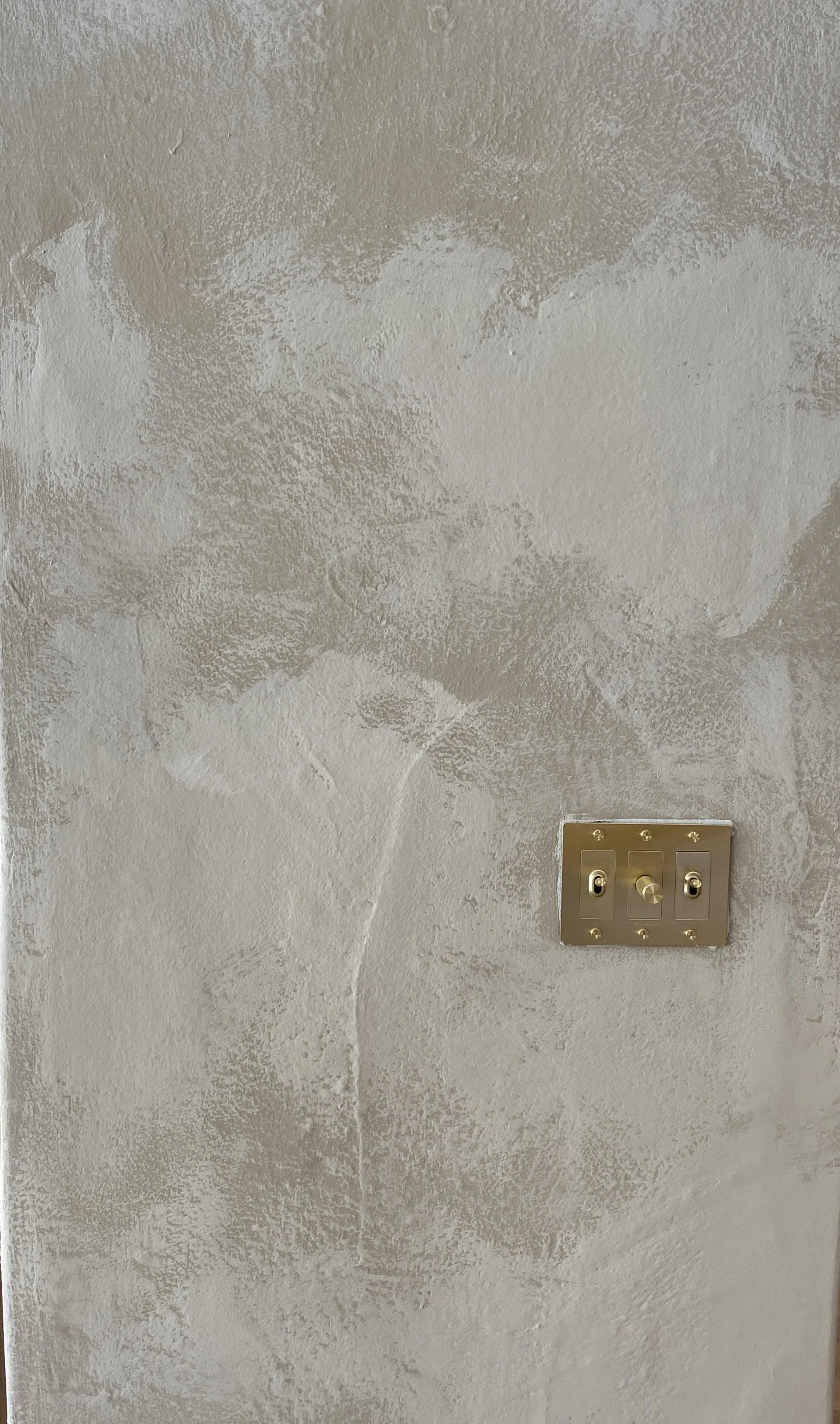
Luxury today is no longer about gloss or excess. It is about craftsmanship, material honesty, and timelessness. Plaster walls embody all three. Roman Clay, Venetian Plaster, Lime Wash, Tadelakt, and Micro Cement elevate interiors beyond trends.
Featured repeatedly in Architectural Digest and Vogue Living, plaster interiors signal thoughtful design and restraint. They create spaces that feel calm, grounded, and enduring.
Choosing plaster over decorative paint is an investment in quality and atmosphere. It transforms a house into a home defined by texture, depth, and intention.
One of a Kind Plaster Walls
Inside the Mind of a Plaster Artist: Creating One of a Kind Plaster Walls
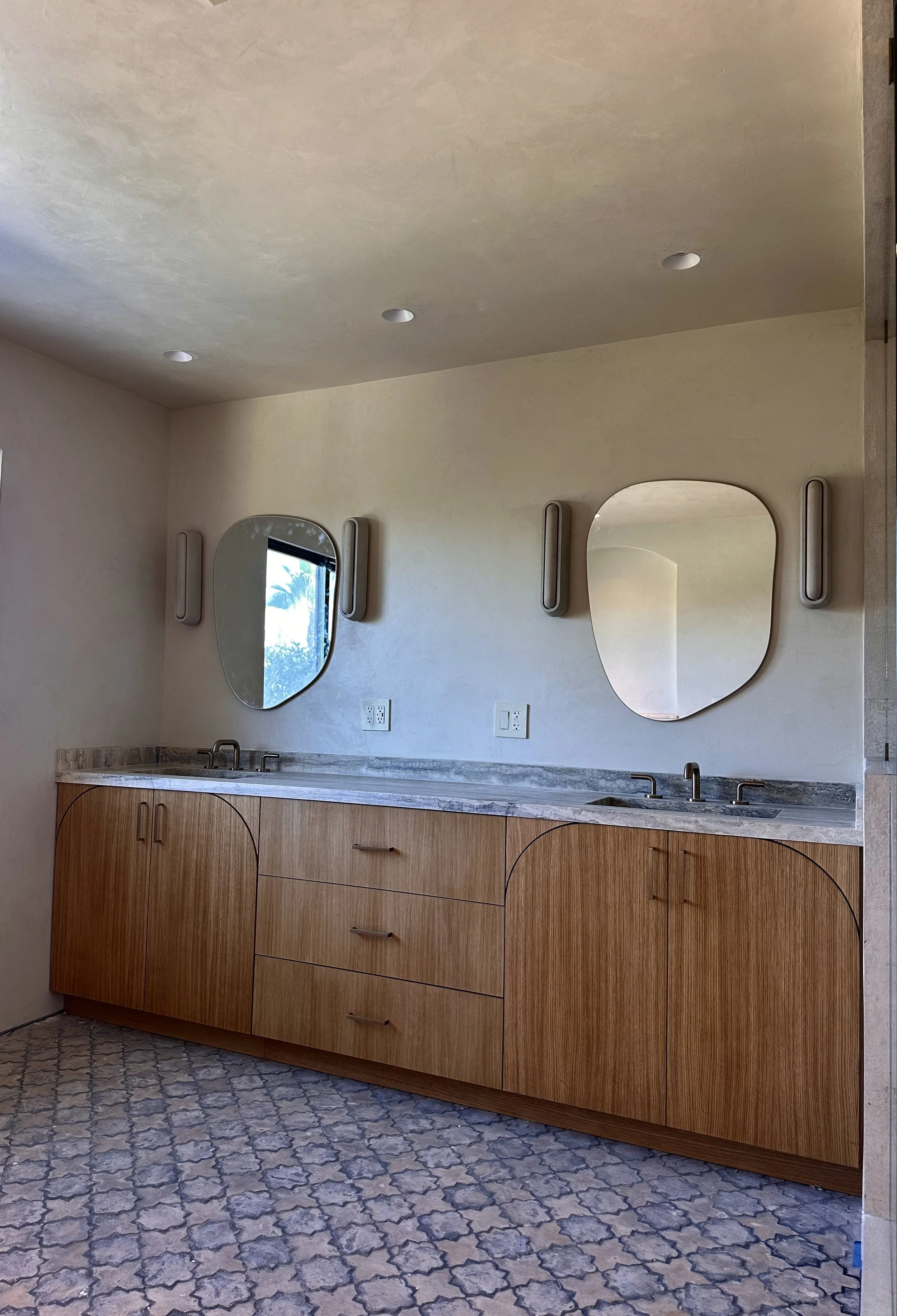
A plaster artist approaches walls like a canvas. Every Roman Clay application or Lime Wash application is guided by movement, pressure, and intuition. No two walls are ever identical.
This human element is what separates plaster walls from mass produced decorative paint. Interior designers value this uniqueness, as it adds soul to a space. Elle Decor often highlights homes where imperfections become the defining feature.
Plaster artistry turns walls into living surfaces that evolve with time and light.
Trends
Decorative Paint Trends Inspired by Architectural Digest, Vogue Living, and Elle Decor
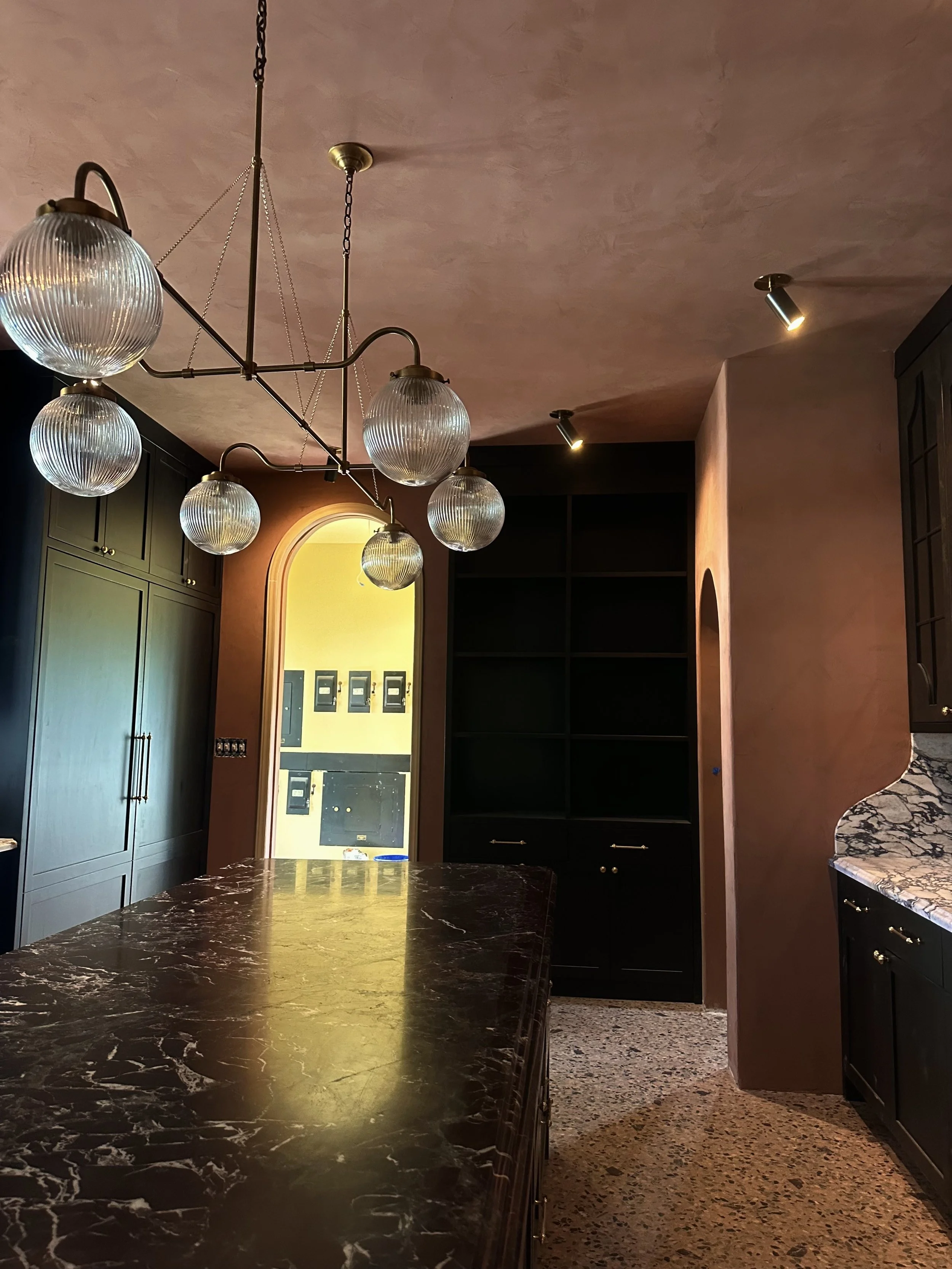
The most influential design publications consistently highlight a move away from flat paint toward textured, artisanal finishes. Decorative paint now means Roman Clay, Venetian Plaster, Lime Wash, and Micro Cement.
These magazines showcase homes where plaster walls create atmosphere without overwhelming the space. Designers favor finishes that feel custom, tactile, and timeless. This shift reflects a broader desire for authenticity in interior design.
Texture driven plaster interiors elevate everyday living spaces, transforming walls into design statements rather than backgrounds.
Lime Wash Application
Lime Wash Application: The Art Behind Soft, Timeless Walls
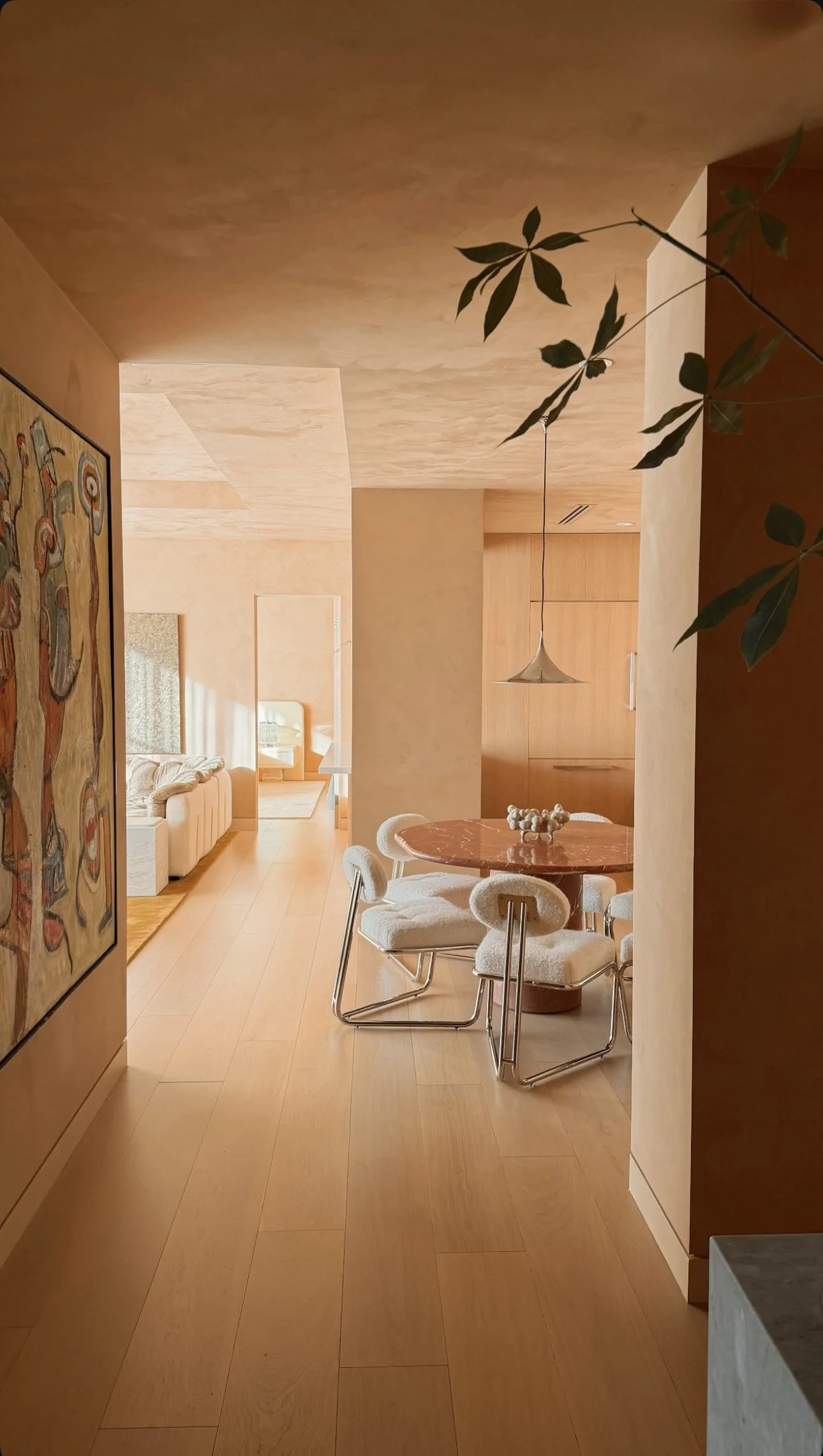
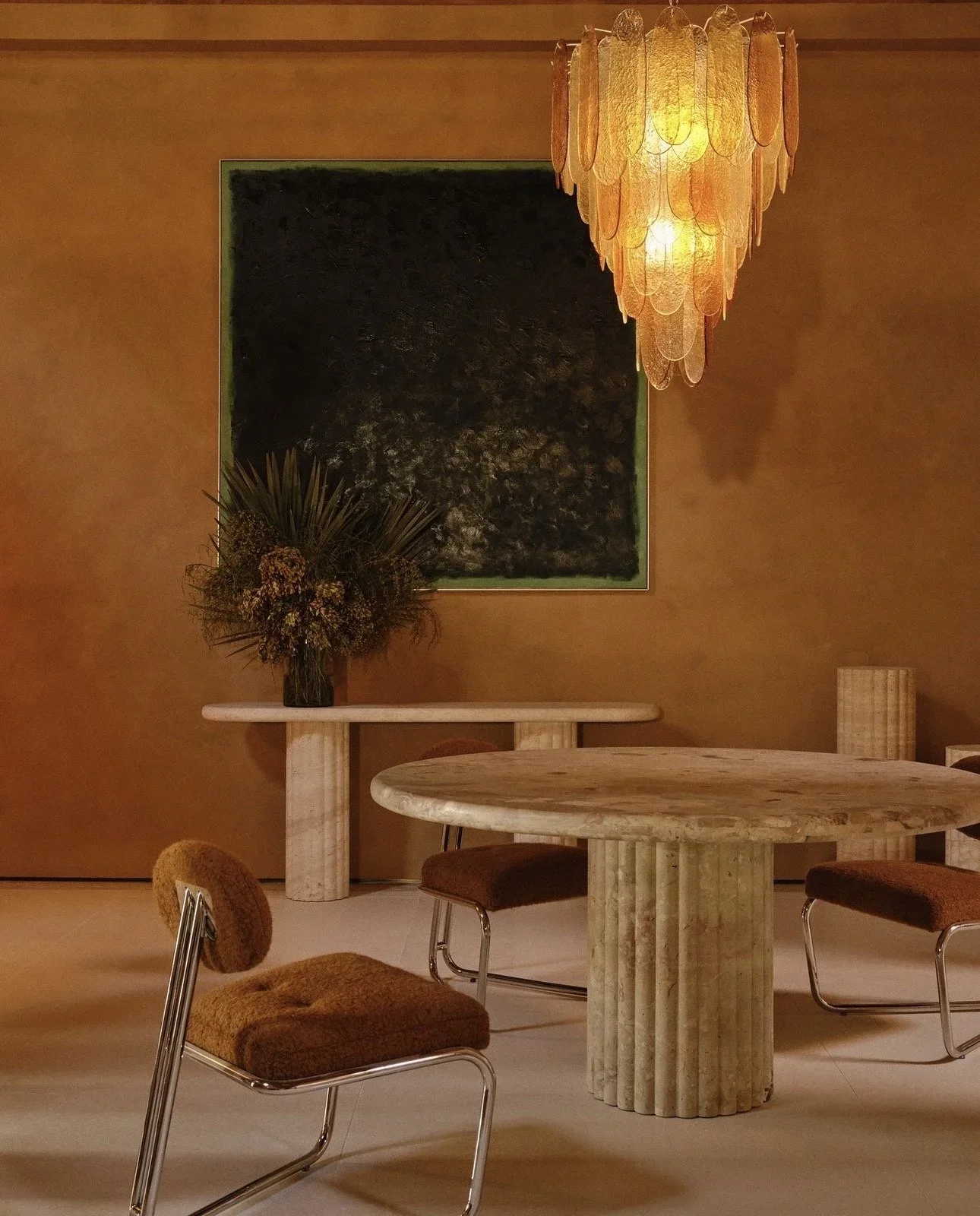
Lime Wash application is an art rooted in history. A Lime Wash painter works with mineral pigments that penetrate the surface rather than sitting on top like decorative paint. This creates a finish that feels natural, breathable, and deeply textured.
Lime Wash walls respond to light in a way few finishes can. Throughout the day, tones shift and evolve, adding life to interiors. This quality is why Lime Wash is frequently featured in Vogue Living’s European inspired homes.
When applied correctly, Lime Wash ages gracefully, developing character over time. It is ideal for clients seeking authenticity and softness in their plaster interiors.
Before Starting a Project
What a Roman Clay Painter Wants You to Know Before Starting a Project
Hiring a Roman Clay painter is not the same as hiring a traditional painter. Roman Clay application requires skill, patience, and an artistic eye. Unlike decorative paint, Roman Clay is hand applied, and every wall is unique.
Surface preparation is critical. Walls must be smooth and properly primed to achieve the desired effect. A professional Roman Clay painter understands how lighting, room scale, and color choice influence the final result. This is why designers trust specialists rather than general painters.
Roman Clay is not about perfection. Subtle variation is part of its beauty. Clients who understand this tend to love the outcome most. This mindset shift is essential when transitioning from flat paint to plaster walls.
Tadelakt
Tadelakt, Concretta, and Micro Cement: The New Language of Modern Plaster Interiors
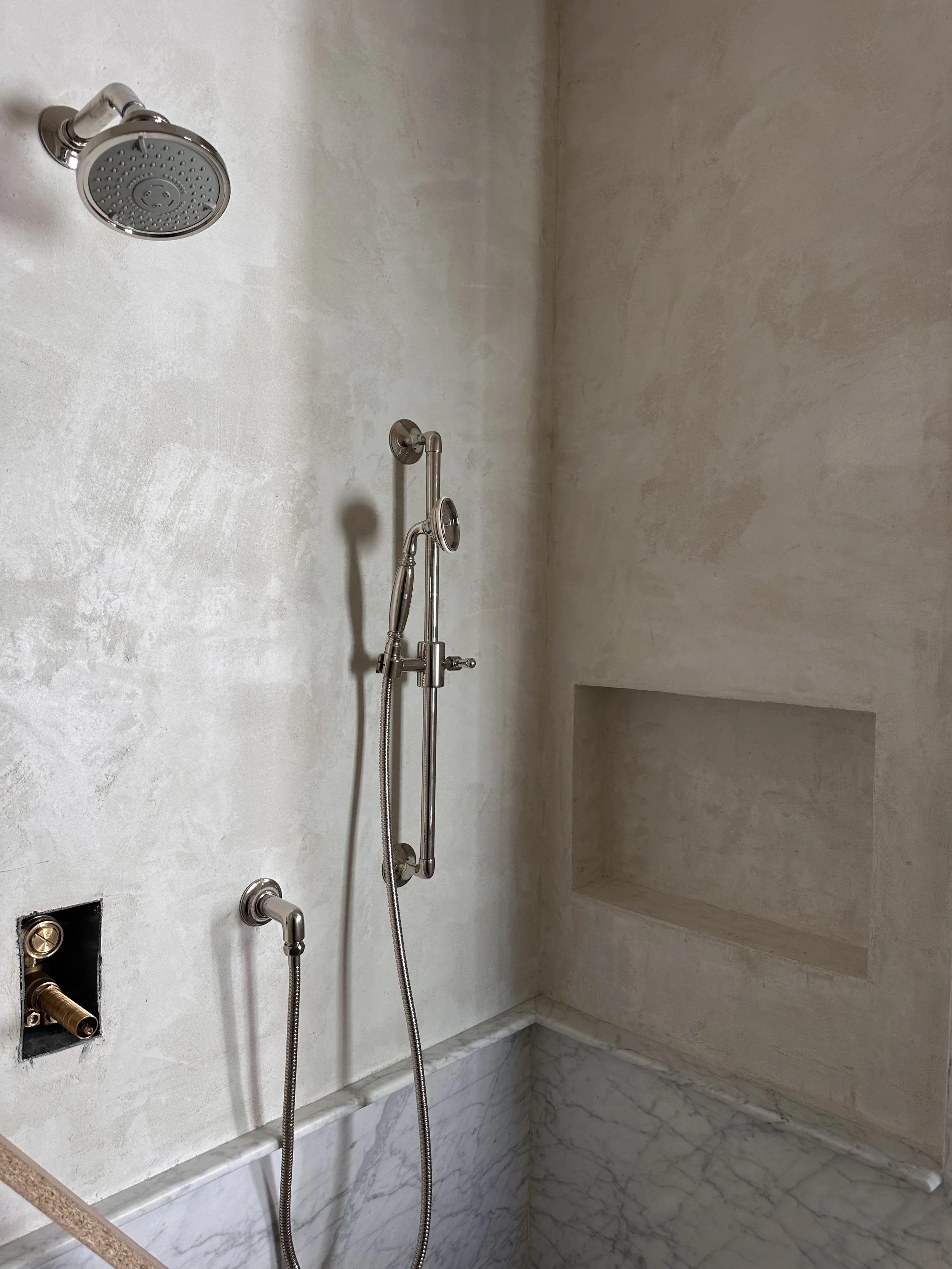
Beyond Roman Clay and Lime Wash, materials like Tadelakt, Concretta, and Micro Cement are redefining modern plaster interiors. These finishes are increasingly featured in Architectural Digest for their seamless, sculptural quality.
Tadelakt is a Moroccan plaster known for its waterproof properties and soft sheen. Applied by an experienced plaster artist, it is ideal for bathrooms, showers, and feature walls. Concretta and Micro Cement offer a refined concrete look without the harshness of raw industrial finishes. They bring a modern edge while maintaining warmth and texture.
Interior designers favor these materials for their versatility and durability. Micro Cement creates continuous surfaces with no grout lines, perfect for minimalist spaces. Concretta delivers depth and movement similar to Roman Clay but with a slightly more architectural feel.
These finishes move decorative paint into a new category entirely, where walls become structural and artistic elements of the design.
Colors
How to Choose the Right Colors for Roman Clay and Lime Wash Interiors
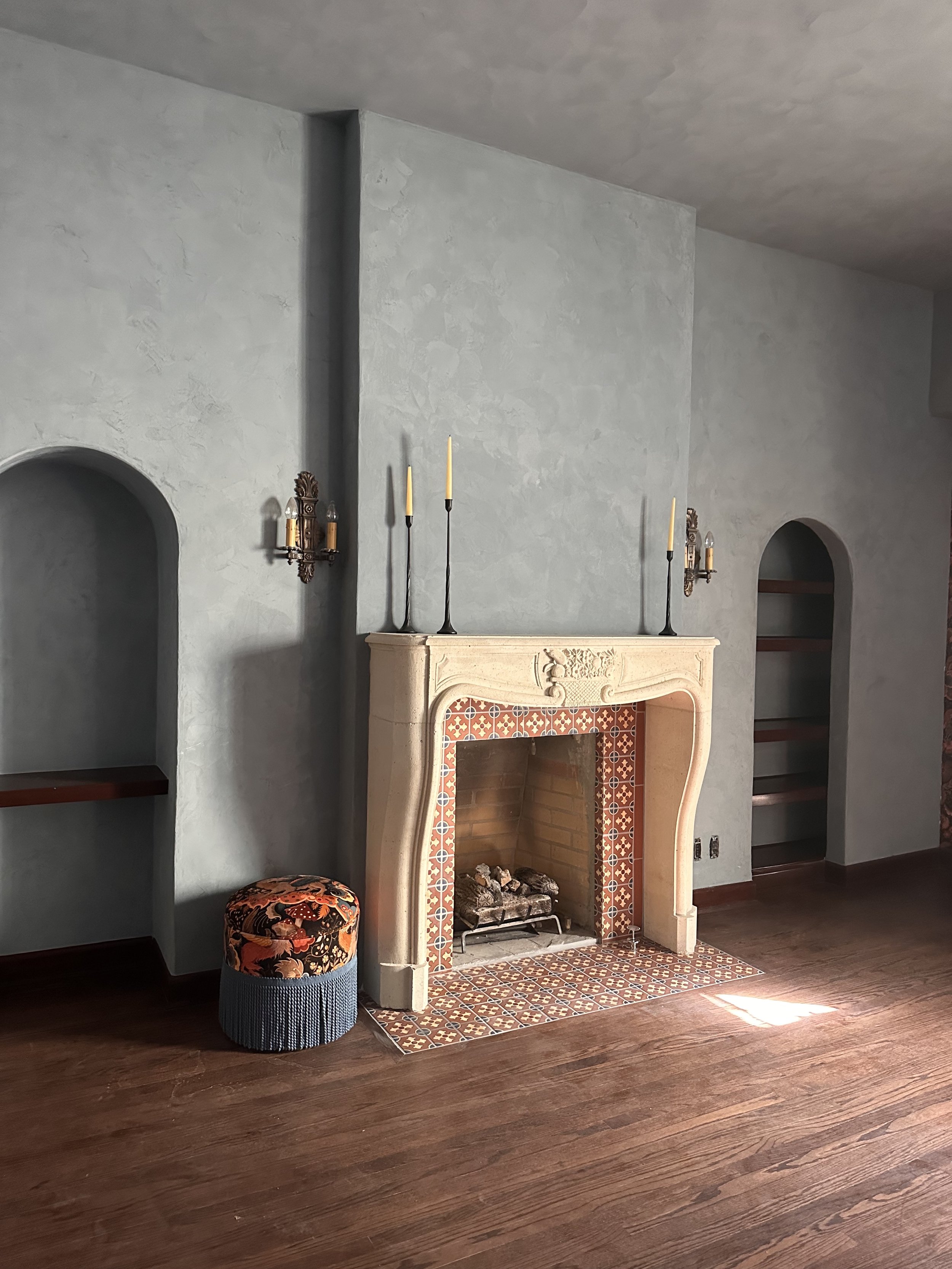
Color selection is critical when working with textured finishes like Roman Clay and Lime Wash. Unlike flat decorative paint, plaster walls interact with light, texture, and movement, meaning color behaves differently. Designers featured in Elle Decor often choose nuanced, earthy tones that enhance the material rather than overpower it.
Roman Clay performs best in warm neutrals, muted taupes, soft greiges, and mineral inspired hues. These tones allow the Roman Clay application to reveal depth and variation. A skilled Roman Clay painter will often recommend sampling colors in different lighting conditions to fully understand their impact. Lime Wash colors tend to appear softer and more diffused, making them ideal for whites, off whites, and gentle pastels.
When selecting colors, consider the overall interior design palette. Natural wood, stone, and textiles pair beautifully with plaster walls. Avoid overly saturated colors, as they can feel heavy once texture is introduced. Vogue Living often highlights homes where plaster interiors remain subtle, letting form and material take center stage.
The right color choice transforms Lime Wash and Roman Clay from finishes into experiences. Thoughtful selection ensures walls feel timeless, calm, and cohesive with the architecture.
Texture Walls > Flat Paint
Why Texture Walls Are Replacing Flat Paint in High End Interior Design
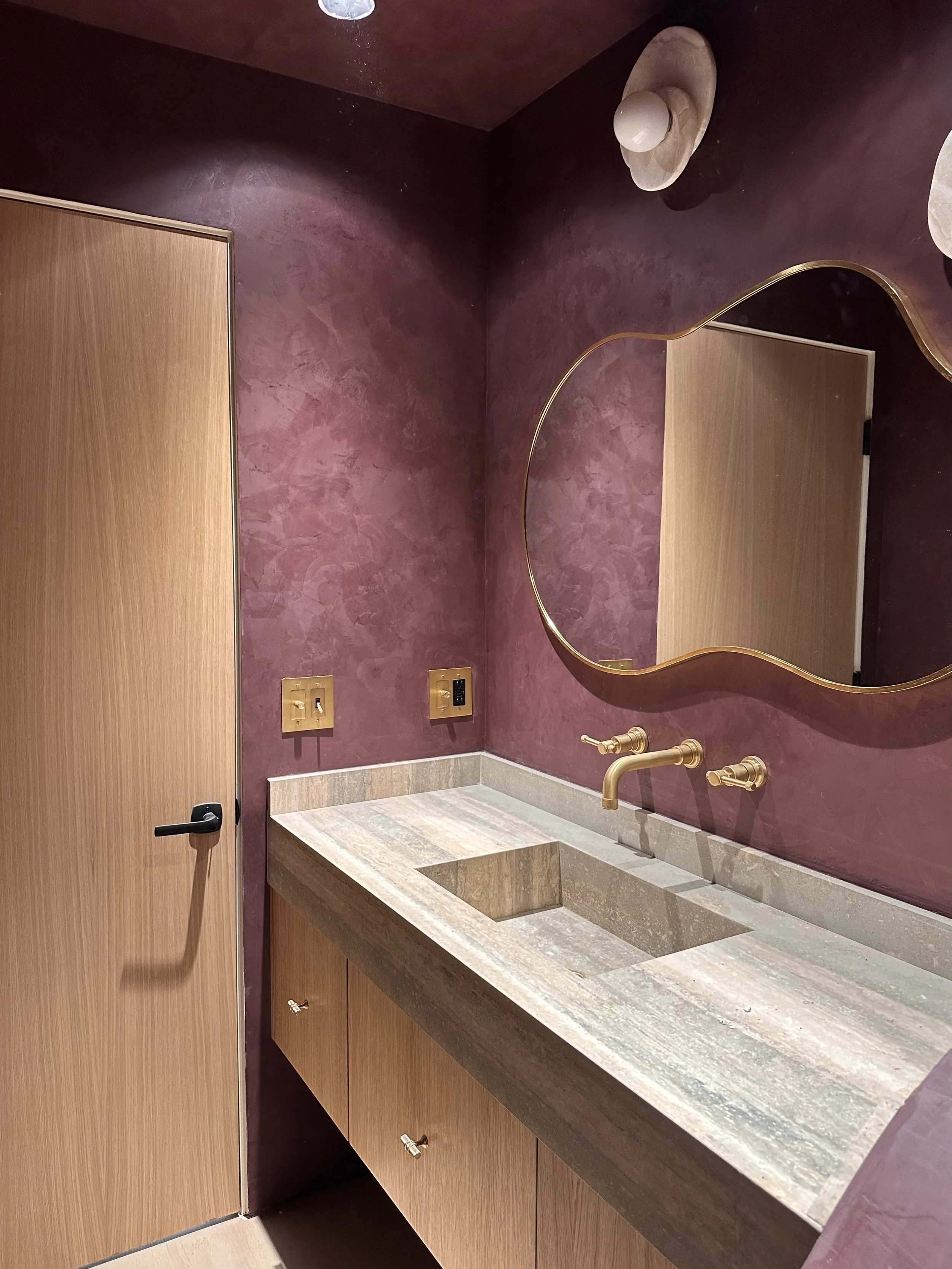
Flat, sterile paint is slowly disappearing from luxury interiors. Texture is now the defining element in sophisticated homes, a shift clearly visible across Vogue Living and Elle Decor. Plaster walls bring emotion, depth, and individuality that standard decorative paint simply cannot replicate.
Roman Clay, Lime Wash, Micro Cement, and Tadelakt introduce subtle imperfections that make a space feel human and intentional. A plaster artist understands that movement, shadow, and variation are what give walls their presence. Unlike flat paint, these finishes respond to light and time, changing throughout the day and aging beautifully.
Texture walls also elevate architecture. They soften sharp lines, complement natural materials, and provide visual interest without relying on excess decor. Interior designers increasingly use Roman Clay application or Lime Wash application to create calm backdrops that allow furniture and art to shine. This is why plaster interiors dominate editorial features in Architectural Digest.
Beyond aesthetics, textured plaster walls are durable and breathable. Lime Wash and mineral based finishes allow walls to regulate moisture, contributing to healthier interiors. This combination of beauty and performance makes decorative plaster finishes the future of interior design.
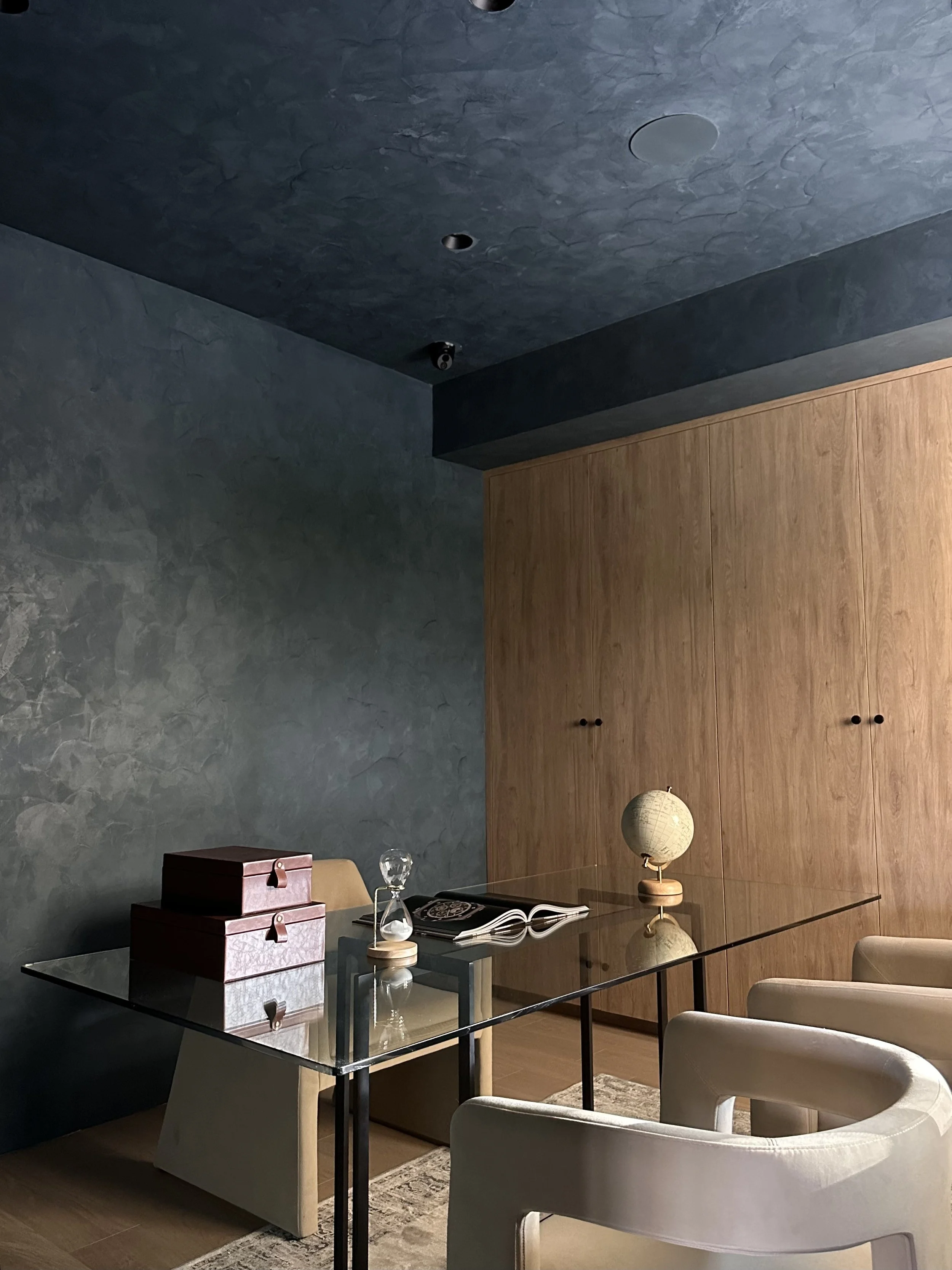
Roman Clay vs Venetian Plaster
Roman Clay vs Venetian Plaster: Modern Minimalism Meets Old World Luxury
Roman Clay and Venetian Plaster are often compared, yet they serve very different design narratives. Venetian Plaster has long been associated with European palaces and classical interiors, while Roman Clay represents a newer, more restrained approach to plaster walls. Both are executed by highly skilled plaster artists, but the outcome and mood are distinct.
Venetian Plaster is known for its high polish and depth. Layered meticulously, it can resemble stone or marble when applied correctly. This finish reflects light and adds drama, making it a staple in luxury interiors featured in Architectural Digest. However, it demands precision and often leans formal. Roman Clay, by contrast, offers a matte, earthy finish that feels contemporary and relaxed. A Roman Clay painter uses broader movements, allowing texture to emerge naturally rather than chasing perfection.
In modern interior design, Roman Clay is often preferred for residential spaces because it feels warm and understated. It pairs effortlessly with wood, linen, and stone. Venetian Plaster is still unmatched in formal spaces like grand entryways, powder rooms, or statement walls where drama is desired. Both finishes outperform traditional decorative paint by adding dimension and authenticity to plaster interiors.
The choice between Roman Clay and Venetian Plaster comes down to lifestyle. If you want walls that quietly elevate a room without overpowering it, Roman Clay is ideal. If you want a bold, luxurious statement rooted in tradition, Venetian Plaster delivers. Designers frequently mix both finishes within the same home, creating contrast while maintaining cohesion.
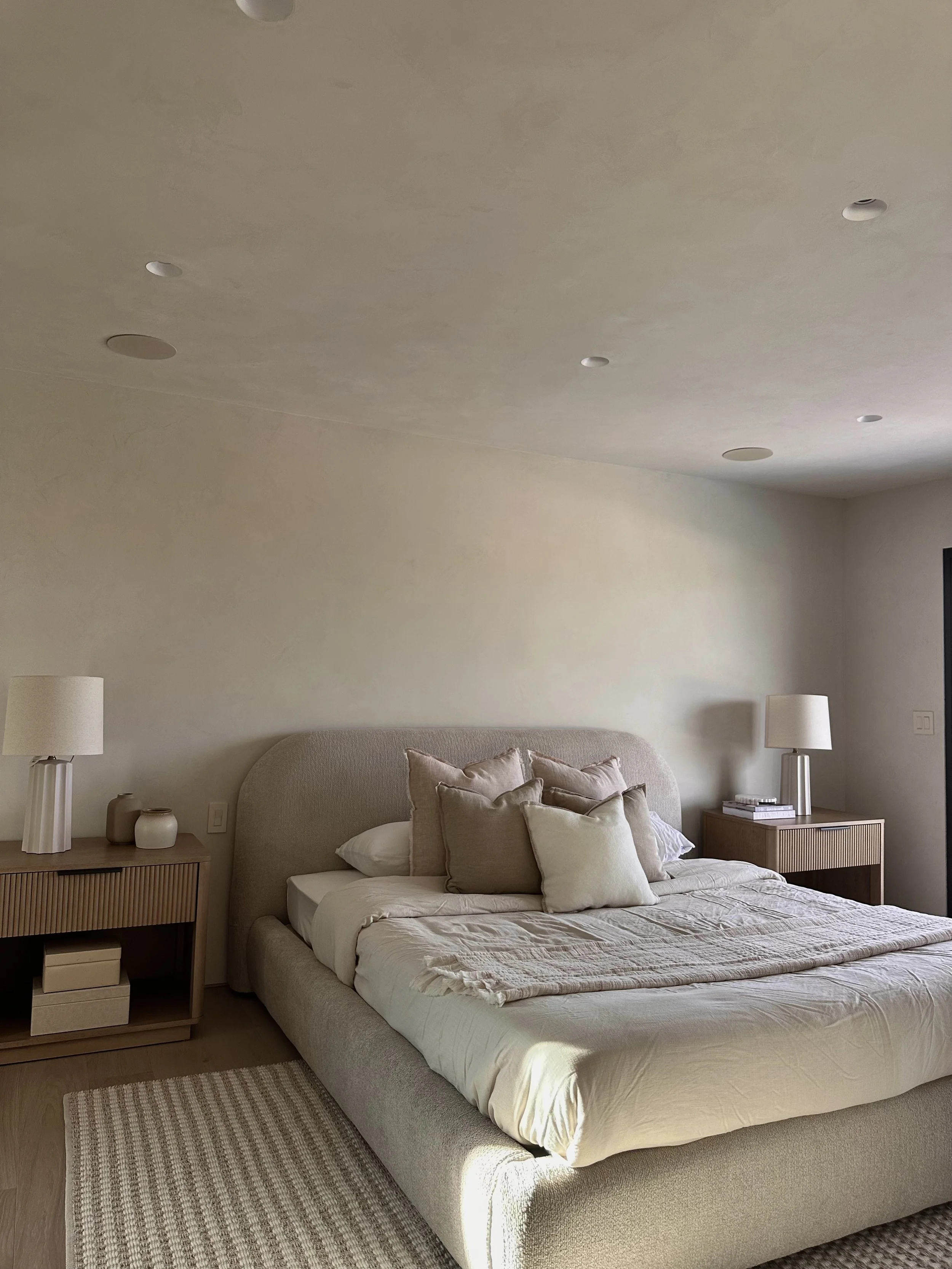
Roman Clay vs Lime Wash
Roman Clay vs Lime Wash: Two Timeless Finishes Redefining Modern Plaster Walls
In today’s interior design landscape, texture has become the ultimate marker of sophistication. Designers featured in Architectural Digest, Vogue Living, and Elle Decor consistently favor walls that feel lived in, tactile, and organic rather than flat and sterile. Two finishes dominating this movement are Roman Clay and Lime Wash. While both fall under the umbrella of decorative paint and plaster walls, they offer very different visual and emotional experiences. Understanding the difference is essential when designing refined plaster interiors.
Roman Clay is a thick, mineral based decorative finish that creates soft movement and depth across walls. Applied by a skilled Roman Clay painter, the Roman Clay application results in subtle variation that feels sculptural and intentional. It is ideal for modern interiors where warmth and minimalism intersect. Lime Wash, on the other hand, is rooted in ancient building traditions. A Lime Wash painter works with a diluted mineral paint that penetrates the surface, creating a chalky, cloudlike finish that shifts with natural light throughout the day.
From a design perspective, Roman Clay feels more controlled and contemporary. It works beautifully in curated interiors with clean lines, custom millwork, and architectural lighting. Lime Wash leans romantic and organic, often seen in Mediterranean inspired homes, European farmhouses, and spaces that prioritize softness over precision. Both finishes age gracefully, which is why designers favor them over conventional decorative paint that tends to look tired over time.
Ultimately, choosing between Lime Wash and Roman Clay depends on how you want a space to feel. Roman Clay offers structure, polish, and modern elegance. Lime Wash delivers atmosphere, history, and depth. Both finishes transform plaster walls into art and elevate interiors beyond trends, aligning perfectly with the timeless design language seen in the pages of Elle Decor and Vogue Living.